The moment the teacher calls your name to taxi out for the first solo, the air field really feels all of a sudden smaller and in some way bigger at the same time. Every runway light seems brighter, every radio transmission crisper, and your own heartbeat occupies the exact same regularity as the engine. Transitioning from a student with a beginning-to-learn state of mind to an aviator who shoulders obligation is less a solitary leap than a collection of mindful actions sewn along with method, persistence, and a healthy and balanced dosage of stubborn curiosity.
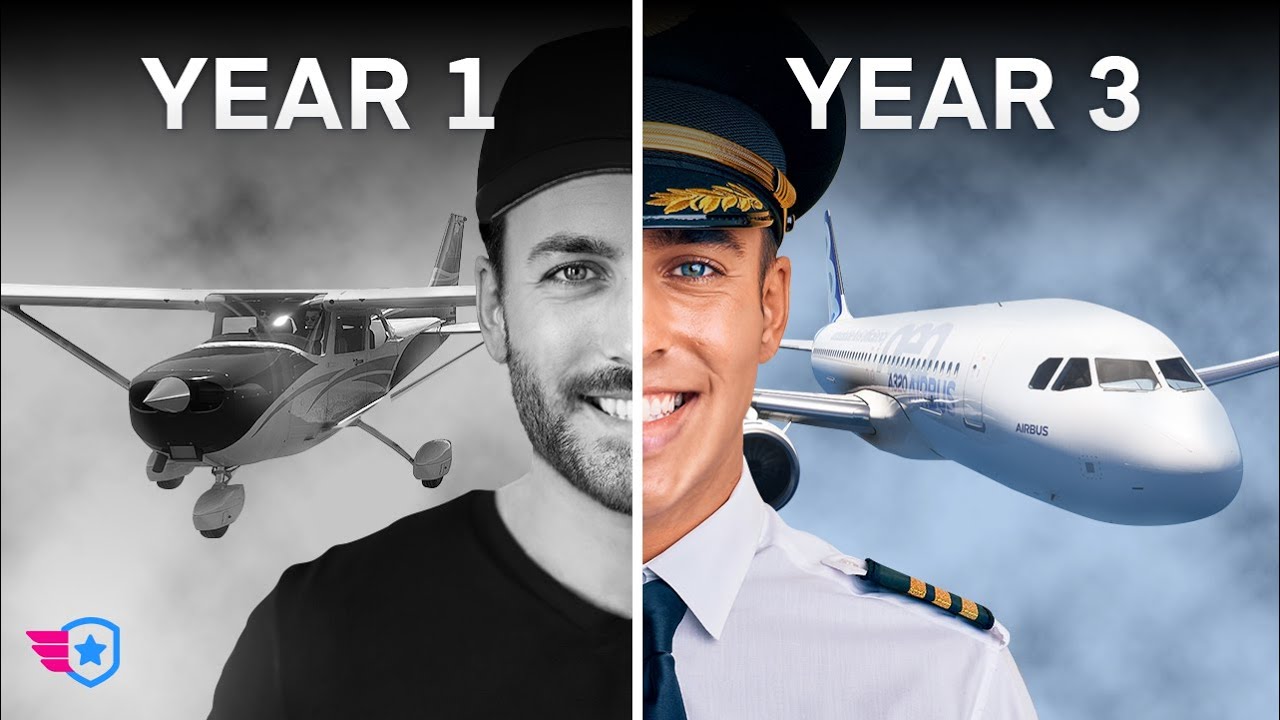
Flight training isn't simply technological skill in a cockpit. It's a mental reorientation, a shift from chasing performance numbers to owning an expert identity. The minute of commencement notes not completion of discovering yet a brand-new phase of it: you stand at the boundary between classroom guideline and real-world decision making, where your options bring tangible repercussions for you and for others who share the airspace.
This post makes use of years of hands-on experience in flight institutions of various sizes, from bustling local programs to intimate, hands-on academies where the focus is on precision and habit formation. Its objective is sensible clarity rooted in lived experience-- what takes place when the rubber meets the sky, what you must expect as you change, and just how to maintain expanding when you step off the ground as an identified pilot in process.
A various sort of begin A typical day in trip training starts long before you pull the yoke back on a Sunday trip with the sunlight just over the perspective. You come to the hangar with a half-formed plan and a complete note pad. The plan includes the maneuvers you'll exercise, the climate window you want to make use of, and the backups you've rehearsed theoretically however will certainly now check in the real life. The contingencies issue since air travel survives on durable planning and regimented implementation. You'll inspect the airplane you will fly with the meticulousness of a jewelry expert checking an invaluable piece: fuel, oil, tires, control surface areas, the magnetos, the navigation instruments, and the flight information that will secure your decisions in the air.
The atmosphere really feels both intimate and professional. In a little flight school, you could recognize the teacher's preferred path for a specific crosswind strategy or the specific minute when a gust will demand a supporting correction. In a bigger program, the cadence can be much more impersonal, yet the standard checklists and the society of security are equally compelling. Regardless, you uncover really quickly that humility is a superpower in aviation. You find out to listen, to watch, to question when required, and to accept that even extremely educated pilots make errors-- and then revise the manuscript to prevent them from repeating.

The psychology of coming to be, not simply discovering The change from trainee to aviator hinges on shifting from a student way of thinking to a professional one. As pupils, we're about obtaining knowledge, mastering a method, and passing checks. As aviators in training, we begin cultivating the mental technique that sustains efficiency under stress: situational understanding that never sleeps, decision making that is speedy and reasoned, and interaction that is clear and accurate also when the radio network is crowded with other voices.
That change can seem like a drift from a map you trust to a map you should learn to improvisate with. You internalize brand-new contexts. The path isn't simply a line on the ground; it's a road with winds, disturbance, and traffic that require regard. The cockpit comes to be a place where you practice threat administration as an everyday routine instead of a postgraduate topic. You discover to verbalize why you do what you do, not just how you do it. This process mirrors other high-skill occupations, but aviation increases the demand for technique since errors have a fast and noticeable cost.
The everyday routine that drills you right into a professional rhythm At its core, flight training has to do with repetition with purpose. You practice climbs up, descents, transforms, and comes close to up until the auto mechanics become automated adequate to leave your aware brain complimentary to concentrate on the bigger photo. The tempo includes substitute failures and actual difficulties, intentional technique in the simulator, and the consistent buildup of trip hours throughout a spectrum of problems. We commonly chat in numbers due to the fact that hours and landings come to be the money of development; yet the true value hinges on the clearness those numbers bring to your choice making under pressure.
A normal training series mixes ground college with real flight. Ground lessons lay out the theoretical supports-- the physics of lift, the interplay of weight and balance, the subtleties of weather condition interpretation, and the navigating approaches that maintain you on training course when the globe goes silent on the radio. After that you step into the aircraft to equate concept into technique. You'll touch down after a short hop and right away assess your efficiency, noting what you succeeded and where you need to boost. The very best training programs cultivate a routine of unbiased self-assessment, coupled with truthful comments from trainers that matter more than a solitary perfect flight.

The structure of an effective change hinges on a couple of reputable columns: safety and security first, skill development, and expert growth. Security initially shows up in the early morning preflight, where you verify the airplane's problem and danger position for the day. Ability growth is the core activity, converting understanding right into trusted execution under varying problems. Professional development indicates finding out to connect plainly with air traffic control, with your trainer, and with your fellow pupils, while building an individual document you can rely on when it matters most.
The minute you recognize you are no longer a pupil There are substantial signs that signify you have actually gone across a line from beginner to pilot-in-training who has actually earned some level of independence. One morning you might return from a solo leg with a calm self-confidence you really did not possess previously. Another day you could be asked to lead a cross-country flight with a partner, dealing with navigating, gas preparation, and emergency treatments with marginal oversight. These minutes do not eliminate the memory of your very early stumbles; they brighten your development. They are pens on a course that leads towards ending up being a qualified pilot, not simply a person that can complete a curriculum.
The human element issues as long as the technological side. You discover to manage the nerves that come with a new duty-- holding the centerline on a gusty day, choosing an alternate airport when weather encloses, or deciding when a mistake requires you to abort and go back to base. Trainers are necessary overviews below; their responses should be relied on and useful. They assist you decipher the distinctions between what you wanted to do, what you believed you did, and what in fact took place airborne. A few of one of the most valuable lessons originate from those moments when reality underscores the limits of your knowledge and your preparedness to act decisively.
From student to aviator: sensible milestones that matter The course from pupil to aviator is led with substantial, trackable turning points. These are not mere accessories on a progress graph; they are the practical signals that claim, yes, you belong in the cabin under real-world conditions.
First, a constant clock of hours. Many programs need a minimal variety of flight hours to graduate and to obtain specific licenses. The range is wide relying on the country and the program, yet a common exclusive pilot track may come close to 40 to 60 hours of trip time before seeking advanced certifications. Tool training includes even more deepness, commonly pushing total hours higher. The hours teach you exactly how to operate with the very same set of available tools in a wide range of weather and traffic scenarios.
Second, effective solo trips. A solo trip is not just logging airtime; it marks your entrance into independent choice production. It is the moment you prove to yourself you can take care of the airplane without the prompt assistance and assurance of an instructor. Some students experience this after a handful of twin trips, others require even more time. Either way, the solo stands as a ceremony of passage.
Third, cross-country capability. Traveling beyond the regional technique location examinations navigational judgment, gas preparation, and the capability to manage danger over longer distances. You learn to chart a course that balances time, gas, and climate while tracking alternates. It is where theory ends up being a practical toolkit that you can pull from when the going gets uncertain.
Fourth, tool proficiency. The instrument ranking broadens your ability by instructing you to keep control in low visibility and deteriorated aesthetic signs. You get confidence in depending on the instruments instead of exterior recommendations. This shift is fundamental for safe trip under tool conditions and typically a gateway to much more complex airplane and routes.
Fifth, a durable safety and security mindset. This is not a solitary badge or a solitary trip. It is the everyday behavior of examining systems, thinking ahead, and selecting more secure alternatives also when it costs time or benefit. It emerges with debriefs, after-action evaluations with teachers, and the technique of not reducing corners when it matters most.
Real-world challenges and how to browse them No account of trip training would be complete without recognizing the harsh sides-- the friction factors that examine a trainee's willpower and develop a future pilot's judgment.
Weather, the ever-present variable, stays one of the most uncertain teacher. Forecasts are valuable, but the real weather at your operating base can spread your schedule like confetti. You learn to review the skies with functional acumen, to analyze wind up, and to stabilize the margin of security versus the desire to fulfill timetable stress. You also learn to make conventional selections early, recognizing that a late choice is often a far better choice than a hurried one.
Engine management and system expertise form another core challenge. Obtaining comfortable with the airplane's efficiency envelope requires you to assume in terms of numbers and relationships as opposed to memorized actions. You'll learn exactly how fuel amount associates with array, just how engine temperatures indicate you to adjust power, and how weight and balance impact stability. The more you comprehend of the system, the less most likely you are to be shocked by an unforeseen condition.
Decision making under pressure is the third column. A crosswind landing, an abrupt gust, or a radio blackout tests your calmness. The skilled pilot continues to be calm, adheres to checklists, and connects with accuracy. The pupil should develop an interior criterion for how to react: call the wind, change the technique, land with self-confidence, and then review what happened with a clear mind to essence learning.
The checks and equilibriums of progression To guarantee safety and consistent progression, flight schools structure development around main checkrides and evaluations. These are not mere hurdles; they are made to duplicate, as very closely as feasible, the choice factors you will encounter as a professional pilot. The checkride checks a combination of technological knowledge, trip proficiency, and the ability to integrate details from several sources. A good checkride feels less like a trap and more like a final, well-practiced discussion of your competence.
But there is always a human aspect behind every pass or fall short. Trainers supply a candid evaluation of staminas and spaces, and they mount failures as opportunities to change your training plan as opposed to as judgments concerning your possibility. Some trainees find out more from a harder comments loophole than from a flawlessly executed flight. The secret is to maintain progressing with function, not to be inhibited by the periodic setback.
The functional day-to-day of ending up being a pilot Beyond the formal checks and the glamorous concept of trip, the everyday life of a trainee pilot is much more workmanlike pilot training than cinematic. You will certainly be scheduling simulator sessions, studying weather condition charts, poring over aircraft systems handbooks, and exercising radio communications till your phrases flow with clarity and rate. You might maintain a meticulous logbook that records the exact problems, flight time, maneuvers practiced, and the lessons gained from each session. This logbook becomes an artifact you can review as you mature as a pilot, a kind of personal ledger that demonstrates development and consistency.
Medical physical fitness matters. It is not a badge of honor you wear as soon as and forget; it is a living demand you maintain via regular assessments and mindful attention to any type of medical problems that could impact flight. The procedure can be tedious, yet it is crucial for safety and for your own confidence. You owe it to yourself and to future passengers to maintain this element of your profession well managed.
The social fabric of a flight school also shapes your trip. You are surrounded by peers that share a typical goal, mentors that push you towards greater requirements, and support team who maintain the procedure running efficiently. The partnerships you construct in this environment will certainly matter when you eventually relocate right into functions with more obligation. The camaraderie can be a strong favorable pressure, specifically during lengthy weeks of exams or when weather rush your timetable and you must improvisate together.
Weathering the transition with a strategy A sensible plan for transitioning from student to pilot is less flashy than the idea of solo flights or cross-country adventures and even more concerning consistent, regimented layering of skills and confidence. It starts with clear goals and straightforward pacing. You need to align your schedule with your knowing rate, recognizing that some actions need even more time and rep to end up being acquired behavior. A versatile strategy recognizes that not on a daily basis will provide a clean performance, but on a daily basis can contribute something purposeful to the bigger picture.
It additionally suggests constructing a helpful learning environment around you. Choose coaches who advise you of what you can achieve when you stay constant and thoughtful. Accept the constructive rubbing of crucial feedback and use it to reframe your method. Practice outside of actual trips, via simulations or desktop computer workouts, when weather or circumstance restrictions your time in the air. The even more you can translate academic concepts into tiny, repeatable activities in the cockpit, the quicker you will certainly accumulate the type of dependability that establishes a good pilot apart from a terrific one.
Two practical lists you can bring into the cockpit
- First, preflight you can rely on. This list is not a routine to remember; it is a psychological design you can adjust quickly under stress. Confirm the airplane identification, verify airworthiness, check fuel and oil levels, inspect control surface areas, verify tool stability, and review the trip plan, consisting of alternates and emergency situation treatments. Completed with a personal danger analysis that considers weather, terrain, and traffic. Second, flight deck practices to grow. Keep cockpit self-control by labeling your jobs in order of top priority, speaking plainly to air traffic control, and maintaining your hands all set on the controls while your eyes check the tools. After each leg, do a tight debrief with on your own and your instructor, focusing on what went well and what need to change next time. Uniformity here substances promptly into reliability.
The viewpoint: where you go from below Graduating from flight school is not the end of your training; it is the entry into a broader globe of aviation opportunities. The certificate you gain opens up doors to a spectrum of courses: local airline company tracks, freight operators, business air travel, flight instruction, or pursuing specialized scores such as multi-engine or high-performance aircraft. Each course carries its very own learning curve, its very own set of dangers, and its own incentives. Your early years in aviation will be about selecting an instructions with AELO Swiss Academy intent and then building the abilities necessary to excel in that environment.
One of one of the most compelling facets of this phase is the chance to influence how you will certainly be viewed as a specialist. Your consistency, your determination to soak up comments, and your ability to communicate plainly become as meaningful as your raw flying ability. Individuals that employ pilots look for dependability-- individuals that show up on time, that handle threat calmly, who can verbalize a strategy and afterwards perform it. The best aviators I have actually recognized were not only practically capable however also trustworthy, credible teammates.
The relevance of continuous knowing can not be overstated. The skies change; brand-new modern technology arrives; treatments develop. As a transitioning aviator, you should embrace a habit of constant enhancement. That can suggest taking additional training in instrument treatments, discovering brand-new flight administration systems, or merely dedicating time to reading about safety case studies and debriefs from throughout the industry. The desire to maintain understanding is the trait that guarantees you remain existing, even as you increase through various duties and responsibilities.
Grounded positive outlook, lived experience, and the pledge of growth There is a word you will listen to typically in aviation circles: technique. It is not a punitive word; it is a practical reminder that the intricacy of flight needs a calculated, repeatable method to every task, from preflight to postflight. Self-control does not kill delight; it multiplies it by getting rid of worry and uncertainty from the equation. When you understand exactly how you will react to a provided circumstance, you feel a lot more certain concerning stepping into the unknown. That confidence does not originate from blowing; it originates from preparation, technique, and regular performance.
Your own tale as a pilot in training will certainly unravel in its very own time. You might climb swiftly with specific stages and discover others to be much more persistent. You might encounter climate hold-ups that check your perseverance, or you could experience minutes of quality when a straightforward improvement in method opens a formerly stubborn maneuver. These moments collect into a narrative that is distinctively yours as a pilot: a narrative constructed from the ground up, based in security, and pushed by a genuine love of flight.
To anybody ready to start this trip, a few plainspoken items of suggestions. Initially, regard the airplane and the procedure. The airplane is an effective equipment, and the more you know about its actions, the richer your flying will certainly end up being. Second, cultivate humbleness. You are learning a language that requires paying attention as long as talking, and you will never ever know everything. Third, purchase your psychological health and fitness as much as your physical skills. The very best pilots I've known take care of their emphasis, their rest, and their decision-making processes with the same roughness they relate to navigating and performance.
Ultimately, the beginning of flight school notes a change from pupil to aviator that is a lot more about way of thinking than just accumulating hours. It is a makeover that welcomes you to carry a professional identification with you, into every crosswind touchdown, every tool strategy, and every new airspace you experience. It is a trip that has a beginning, a constant present, and a future improved the durable structures you have actually stocked the understanding years.
If you go to the cusp of this transition, take heart. The globe of aviation worths individuals who turn up ready, who study earnestly, and that treat every trip as a chance to fine-tune their craft. The airspace is generous to those that earn it with technique, patience, and a stable dedication to safety and security. The moment you enter the function of a pilot in training who understands what it takes to keep people secure and to act emphatically, you will certainly recognize this as truth start of your career.
And then, when the sun dips low and the path lights flicker to life, you will certainly recall and realize that the trip you began as a student has actually become a regimented, certain practice you bring with you into every now and every next flight. The skies are not a final destination; they are a proceeding discussion with gravity, climate, and modern technology, and you now have a voice strong enough to join it with clearness and care.